
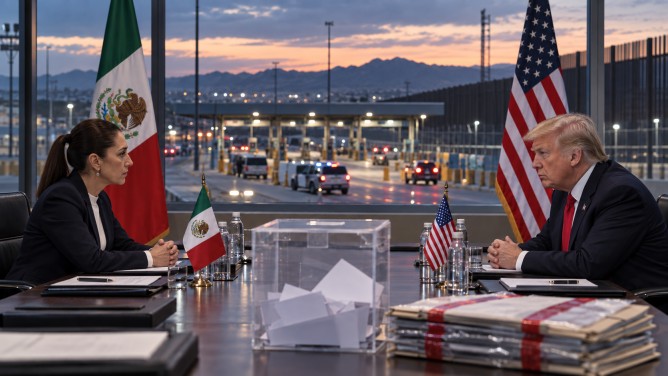
The escalating tension between the United States and Mexico is casting a shadow over upcoming elections in both countries, with significant implications for diplomatic and security cooperation. The Trump administration has heightened its demands on Mexico, urging it to crack down on drug trafficking and address alleged corruption involving public officials with ties to organized crime.
As the U.S. midterm elections approach, President Donald Trump has intensified his criticism of Mexico, accusing it of insufficient efforts to curb the illegal drug trade and to pursue officials implicated in criminal activities. This stance has become a key talking point in the political discourse surrounding the elections, emphasizing domestic security concerns.
In response, Mexican President Claudia Sheinbaum has staunchly defended her country’s actions against organized crime and corruption, rejecting what she perceives as undue interference by the U.S. Sheinbaum has also called on the United States to bolster its measures against drug distribution, money laundering, and the illegal flow of weapons into Mexico, which she argues exacerbate the challenges faced by her government.
The diplomatic row has been further fueled by recent U.S. legal actions targeting Mexican officials accused of criminal affiliations and the revocation of visas for several Mexican politicians. President Sheinbaum has questioned the timing and motivations behind these moves, suggesting they may be politically driven.
Within Mexico, the controversy is influencing domestic politics as well. The ruling party, Morena, is under scrutiny from opposition groups that are leveraging allegations of “narco-politics” to challenge its integrity ahead of the 2027 elections. In response, Sheinbaum’s administration has implemented stricter measures, such as enhanced background checks and financial disclosure requirements for political candidates, to mitigate these concerns.