
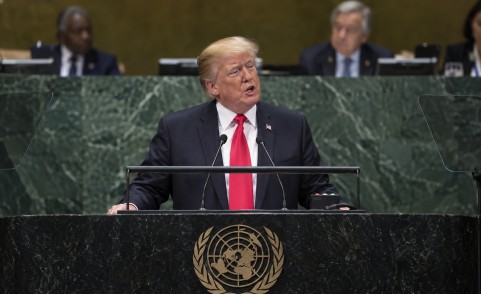
The call for “complete economic isolation” of Iran by U.S. President Donald Trump could have significant implications for global energy prices and geopolitical stability. Addressing the United Nations General Assembly in New York, Trump emphasized that international cooperation in isolating Iran economically might ease soaring energy costs and apply pressure on Tehran regarding its nuclear ambitions.
In his speech, Trump defended the U.S. military strike on Iran and reiterated a firm stance against allowing Iran to develop nuclear weapons. He warned that without progress towards an agreement, the U.S. might consider further military action. The potential for increased tensions in the region could contribute to ongoing volatility in energy markets, particularly affecting prices globally as geopolitical conflicts often do.
Trump also expanded his address to cover other pressing issues, notably the development of artificial intelligence (AI). He rejected the idea of imposing stricter regulations on AI, instead highlighting its vast potential, comparing it to the Industrial Revolution. He dismissed warnings about AI’s risks as exaggerated, labeling them a “hoax.”
In a strategic move to bolster defense, Trump announced plans for establishing two new U.S. military bases in Greenland, following an agreement with Denmark. This development is positioned as a measure to enhance the defense infrastructure of both the American continent and Europe.
Additionally, Trump touched on the ongoing Russia-Ukraine conflict, expressing optimism about reaching a settlement. The conflict, along with disruptions around the Strait of Hormuz, continues to exert pressure on energy prices. Trump’s approach to these international issues underscores the complex interplay between geopolitical strategies and global economic impacts.