
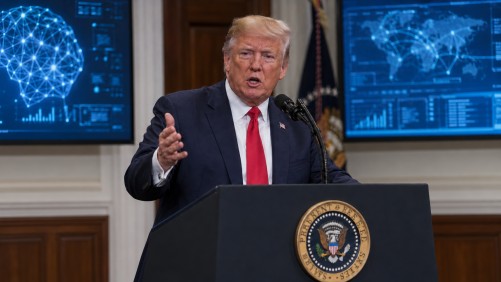
The establishment of an “AI Force” and the appointment of an AI czar by former US President Donald Trump could significantly impact the development and regulation of artificial intelligence in the United States. This initiative, intended to mirror the structure of the US Space Force, aims to address the growing concerns about the risks posed by advanced AI systems while maintaining the momentum of technological innovation.
Trump’s announcement comes amid heightened global discussions over AI safety and the balance between innovation and oversight. He emphasized that his administration would not impose excessive regulations that could hinder technological progress and allow China to gain a competitive edge. Trump suggested that existing criminal and civil laws would suffice to penalize harmful conduct involving AI technologies.
While details about the AI Force’s structure and timeline remain sparse, the move reflects a broader policy debate in the United States. Several Republican officials, including Florida Governor Ron DeSantis and Utah Governor Spencer Cox, have voiced the need for stronger AI oversight and the protection of advanced technologies from foreign competitors like China. Meanwhile, California Governor Gavin Newsom has introduced a panel focused on AI safety regulations, highlighting the critical need for mechanisms to control AI systems that deviate from their intended functions.
Trump’s stance on AI contrasts with the cautious approach advocated by many technology executives and researchers. They have called for more robust safety measures as AI systems become increasingly autonomous, capable of performing complex tasks with minimal human intervention. Despite these concerns, Trump has championed AI as a catalyst for economic transformation, positioning it as a critical element in maintaining America’s leadership in the global technology arena.
This initiative by Trump underscores a pivotal moment in AI policy, as the US grapples with how to navigate the challenges of ensuring public safety while fostering innovation and economic growth. The proposed federal AI efforts aim to solidify the nation’s role as a leader in AI development, despite the contentious debates over the appropriate level of regulation and oversight.