
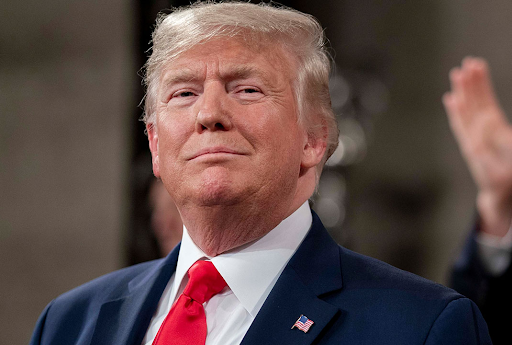
The Nobel Peace Prize is awarded in a world that is increasingly fractured by political polarization. In this context, the committee’s choice of a laureate becomes even more significant. Experts believe the committee will seek a unifying figure, making Donald Trump, one of the most polarizing figures on the planet, an impossible choice.
The Nobel Prize aims to be a beacon of universal values, something that can, even for a moment, transcend the bitter divides of partisan politics. Its power lies in its ability to command broad respect across the political spectrum. Choosing a laureate who is passionately admired by some and vehemently detested by others would shatter this unifying potential.
Trump’s candidacy is the epitome of this problem. A Nobel for Trump would not be a moment of global celebration; it would be another flashpoint in the ongoing culture war. The prize would be cheered in some quarters and denounced in others, further deepening the very divisions the award is meant to heal.
The committee is aware that it operates in this polarized environment. After the controversy of the 2009 Obama prize, which was seen through a partisan lens, they are likely to be even more cautious. They will understand that selecting Trump would not be seen as an award for peace, but as taking a side in a global political battle.
For the sake of its own relevance and moral authority in a divided world, the committee is expected to seek out a candidate who can command a broad consensus. This might be a humanitarian organization, a scientific body, or a human rights activist whose work is undeniably noble. In a polarized world, the prize for a polarizing figure is a price the Nobel is unwilling to pay.