
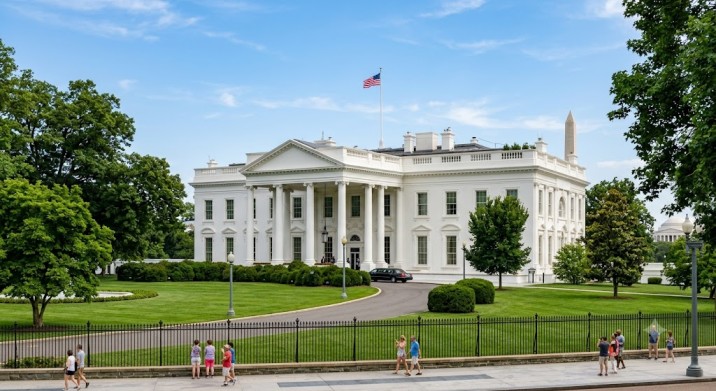
In the wake of Argentina’s national football team displaying a banner supporting their country’s claim to the Falkland Islands, the White House has expressed its stance on the matter. Following Argentina’s semi-final victory over England in the World Cup, this gesture has stirred controversy. Andrew Giuliani, who leads the White House’s FIFA taskforce, emphasized that the United States upholds the principle of freedom of expression. Meanwhile, UK officials have voiced their disapproval, urging FIFA to investigate whether this act contravenes the regulations against political messages in football.
FIFA has acknowledged the situation and confirmed that it is assessing the incident through its disciplinary channels. The display of the banner has once again brought the longstanding dispute over the sovereignty of the Falkland Islands into the spotlight. This contentious issue has historically been a point of national pride and sensitivity for both Argentina and the United Kingdom.
The reaction from the Falkland Islands government was swift, labeling the display as inappropriate. The local authorities have called on FIFA to adhere to its policy of maintaining a separation between politics and sport, a stance that FIFA has often reiterated as part of its efforts to keep the sport neutral and focused on the game itself.
These developments highlight the enduring sensitivity surrounding the Falkland Islands, a topic that resonates deeply in both Argentine and British diplomatic circles. The incident serves as a reminder of how sports events can sometimes become arenas for political expression, drawing international attention and necessitating responses from global organizations like FIFA.