
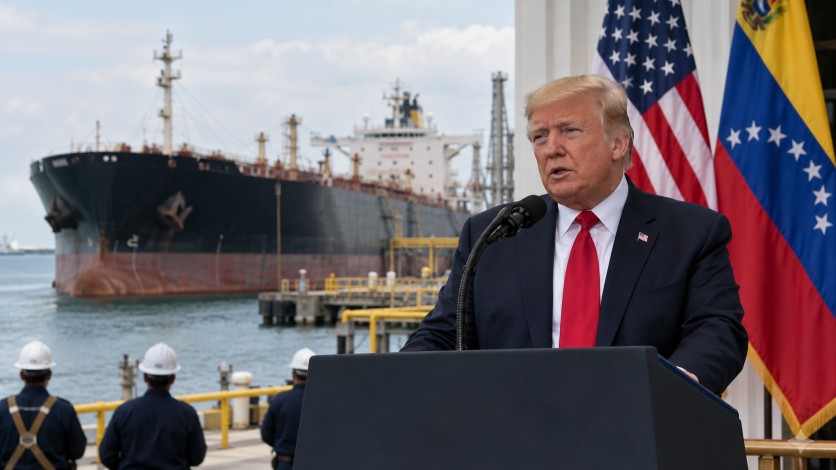
In a bold assertion of energy policy, US President Donald Trump has announced a new oil agreement with Venezuela that he claims could significantly bolster American energy resources. Speaking at a campaign rally in Corpus Christi, Texas, Trump highlighted an oil tanker off the Texas coast, which he stated was carrying one million barrels of Venezuelan oil. He lauded the agreement as a massive victory for the US, emphasizing that this shipment would come at no expense to American taxpayers.
Trump further suggested the possibility of Venezuela eventually becoming the 51st state of the United States, envisioning a future where the South American nation could thrive under the new arrangement. This agreement was brokered with Venezuela’s interim government following a US military operation in January that led to the capture of former President Nicolás Maduro, who now faces criminal charges in New York.
The President contends that this deal will solidify US energy dominance and help mitigate rising domestic fuel prices, which have surged amid geopolitical tensions with Iran and disruptions to global oil supplies. However, the agreement has sparked controversy, with critics arguing that the US is prioritizing access to Venezuelan oil over fostering a democratic transition in the country. Notably, Venezuela has not held elections since Maduro’s apprehension by US forces.
This development occurs against the backdrop of heightened tensions involving Iran, which have disrupted oil shipments through the Strait of Hormuz—a critical passageway for about 20% of global oil supplies. These disruptions have contributed to escalating energy prices, exerting pressure on consumers and the global market.
While Trump touts the Venezuelan oil deal as a cornerstone of his energy strategy, questions linger about its long-term economic impact, the political future of Venezuela, and whether it will effectively curb fuel prices in the US. As the situation unfolds, the balance between strategic energy interests and political considerations remains a focal point of debate.