
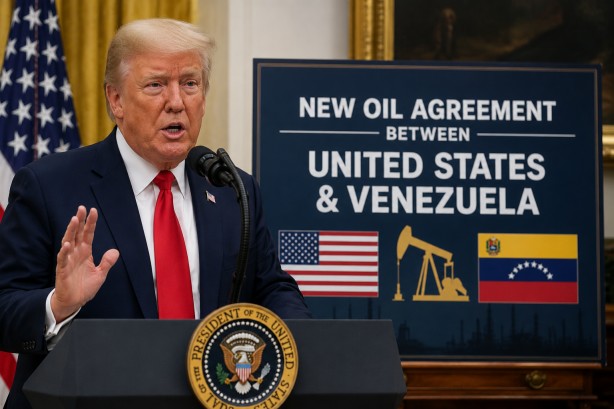
In a significant development, U.S. President Donald Trump has unveiled a new oil agreement with Venezuela, asserting that the United States will secure “majority” control over more than 65 billion barrels of Venezuela’s proven oil reserves. This announcement highlights a strategic partnership with private businesses and includes the involvement of senior U.S. officials. While President Trump emphasized the mutual benefits of the deal for both American and Venezuelan citizens, he stopped short of disclosing specific details regarding the companies involved, the oil fields targeted, or the structure of U.S. control over these valuable reserves.
Venezuela is known for holding the largest proven oil reserves globally, estimated at approximately 303 billion barrels. Despite enduring years of decline within its energy sector, the country continues to produce around 1.25 million barrels of crude oil each day. The newly announced agreement aligns with Washington’s broader strategy to increase the supply of Venezuelan crude to U.S. refineries and attract American investments into Venezuela’s oil industry. This increased access to Venezuelan oil could potentially aid the U.S. in tackling rising gasoline prices and replenishing its strategic petroleum reserves.
Earlier reports suggested that the U.S. was engaged in advanced negotiations concerning direct stakes in several key Venezuelan oil fields. These potential investments are expected to involve substantial financial commitments from American energy companies, possibly totaling billions of dollars. Such investments could represent a significant infusion of capital into Venezuela’s beleaguered oil sector, which has faced numerous challenges over the years.
However, the agreement has not been without controversy. Parts of Venezuela’s opposition have expressed concerns about the extent of U.S. involvement in the nation’s energy resources. Critics are particularly wary about the scale and implications of this engagement, questioning how it might impact Venezuela’s sovereignty over its oil reserves.
As U.S. energy firms gear up for potential investments in Venezuela’s oil fields, more information about the deal’s ownership structure and the participating companies is anticipated. These details will be crucial in providing a clearer picture of how this landmark agreement will unfold and its potential impact on both countries’ energy sectors.