
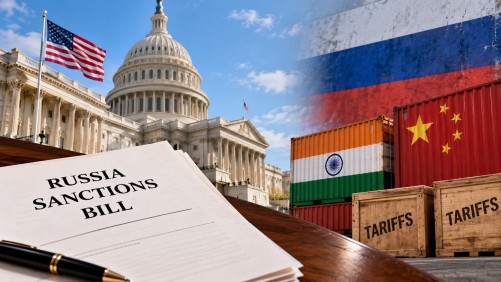
The recent passage of the Lindsey O. Graham Sanctioning Russia and Iran Act of 2026 by the US House of Representatives could significantly impact global trade, particularly for countries like India and China. This legislation empowers President Donald Trump to impose tariffs of up to 100% on nations that continue purchasing Russian oil and natural gas, potentially complicating these countries’ energy sourcing strategies and affecting ongoing trade discussions with the US.
Passed by a 262-159 vote in the House, the bill had already cleared the Senate and is now awaiting President Trump’s decision. The legislation’s primary focus is on imposing stringent measures against Russia’s energy and defense sectors. It also aims to disrupt the operations of Russia’s oil tanker network, which has been instrumental in circumventing existing sanctions. The act provides the US president with the authority to apply tariffs on goods from countries that meet certain criteria related to Russian energy purchases or activities that evade sanctions.
India’s Ministry of External Affairs has stated that its decisions regarding energy sourcing are driven by national interests, highlighting the potential friction this legislation could introduce into US-India trade relations. The possibility of facing up to 100% tariffs could be a major factor in bilateral discussions, especially as India continues its purchase of Russian energy resources.
While the act does not automatically enforce the proposed tariffs, it grants the president the discretion to decide based on the outlined framework. This development could also have implications for China, another major buyer of Russian energy, as it navigates its own trade relations with the United States.
Beyond its impact on countries trading with Russia, the legislation extends existing sanctions on Iran and introduces new measures targeting Russian officials, financial institutions, and entities involved in sanctions evasion. These provisions underscore the US’s broader strategy to exert economic pressure on nations it deems to be in violation of international sanctions.