
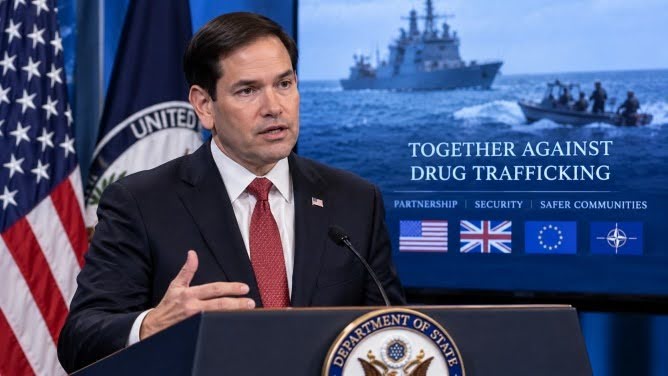
During a recent visit to Ecuador, US Secretary of State Marco Rubio announced that the United States plans to enhance its collaboration with Latin American allies to address drug trafficking issues. Rubio emphasized that while cooperation with countries like Ecuador and Colombia is a priority, the US military retains the option to strike vessels when deemed necessary. These efforts will focus on joint operations within territorial waters, adhering to local laws and regulations.
Rubio’s statement comes in the wake of an ongoing US military campaign targeting boats suspected of drug trafficking activities. The most recent operation in the Caribbean Sea resulted in the deaths of three individuals, increasing the total reported fatalities from such US strikes to at least 230 across 69 operations since the initiative’s inception in September 2025.
The Secretary of State highlighted that future military actions against drug trafficking will be evaluated individually, based on the perceived threat and the vessel’s location. Rubio underscored the importance of regional cooperation in disrupting and eventually dismantling drug-trafficking routes. This strategic shift towards collaborative efforts marks a response to previous criticisms of the US’s unilateral strikes, which targeted vessels linked to so-called “narco-terrorists” during the Trump administration.
As the US seeks to strengthen its alliances in the region, Rubio’s visit underscores a commitment to working alongside Latin American countries to combat the illicit drug trade. By fostering agreements for joint operations, the US aims to address the complexities of drug trafficking more effectively and in a manner that respects the sovereignty and legal frameworks of its partner nations.