
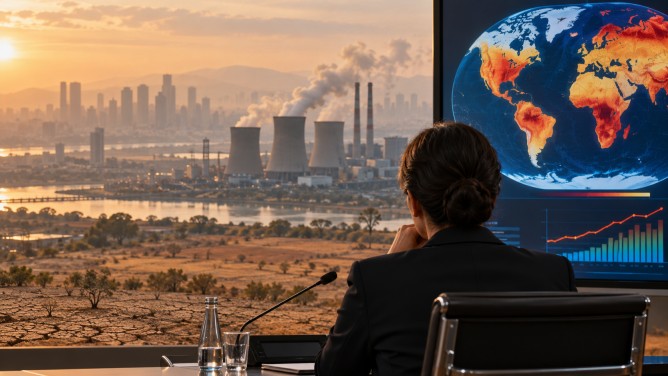
The United Nations Environment Programme (UNEP) has issued a stark warning that global greenhouse gas emissions must be reduced by 18% by 2030 to mitigate the harshest impacts of climate change. This reduction is crucial to improving the chances of limiting the rise in global temperatures to 1.7°C above pre-industrial levels, as outlined in a recent report.
The report highlights that the world is currently off course to meet the 1.5°C warming limit established under the Paris Climate Agreement. Nonetheless, it remains possible to limit the extent and duration of temperature overshoot if urgent and decisive actions are taken by governments worldwide.
Despite a year-on-year stagnation in global emissions by 2025, this does not signal a long-term decline, UNEP experts caution. The ongoing reliance on fossil fuels and uncertain climate policies pose significant challenges, even as renewable energy sources like solar and wind power are experiencing rapid growth.
Updated national climate commitments are falling short, the report notes. Even if countries adhere to their current pledges, global temperatures could rise by approximately 2.6°C above pre-industrial levels. Under existing policies, the increase could reach 2.8°C, heightening the risk of extreme weather events, agricultural damage, and other climate-related disasters.
Experts are urging major fossil fuel-producing nations to expedite the shift to clean energy and enhance their emissions-reduction strategies. They emphasize the importance of reducing methane emissions due to its potent short-term warming effects compared to carbon dioxide. Quick and decisive government action is essential to bridge the gap between climate commitments and actual policy implementation.
Looking ahead, the UN’s upcoming global climate assessments are expected to be pivotal in evaluating national progress and promoting stronger commitments. Scientists warn that any delay in action could increase the likelihood of irreversible changes to the climate system.