
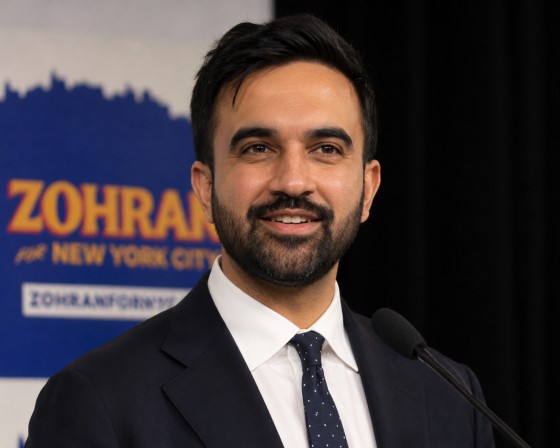
Mayor Zohran Mamdani of New York City has publicly acknowledged that the city lacks the legal authority to arrest Israeli Prime Minister Benjamin Netanyahu if he visits the United States later this year. This statement follows a detailed review by Mamdani’s administration of the legal avenues available concerning the International Criminal Court’s (ICC) arrest warrant issued against Netanyahu. Despite an exhaustive evaluation, the conclusion was that New York City does not possess the jurisdiction to act on the warrant.
In a video message shared on social media, Mamdani urged the US federal government to act upon the ICC’s warrant. Emphasizing his stance, he labeled Netanyahu a war criminal and stressed that neither Netanyahu nor any other individual with similar allegations would be welcome in New York City. Netanyahu is anticipated to visit New York in September to participate in the United Nations General Assembly, an event that has prompted Mamdani to reiterate his campaign promise to explore enforcement options against the Israeli prime minister.
The ICC’s arrest warrant for Netanyahu, issued in 2024, accuses him of war crimes. However, this presents a complex situation as the United States does not recognize the ICC’s jurisdiction and is not a member of the court. This legal landscape significantly complicates any potential actions by US authorities concerning the warrant.
In response to Mamdani’s comments, former US President Donald Trump criticized the New York City mayor, firmly stating that Netanyahu would not face arrest while on American soil. Trump also defended Netanyahu’s actions, aligning with the stance that the Israeli leader should not be subjected to arrest based on the ICC’s allegations.
Meanwhile, Prime Minister Netanyahu has dismissed the controversy surrounding the mayor’s remarks, expressing a lack of concern over Mamdani’s statements. His planned attendance at the United Nations General Assembly remains unchanged, indicating that the diplomatic engagement will proceed as scheduled despite the ongoing debate. The situation highlights the tension between local authorities’ positions and federal jurisdiction regarding international legal matters.