
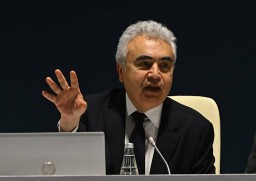
Despite the devastation it has caused, the Iran energy crisis also presents a historic opportunity to build back a better and more resilient global energy system, the head of the International Energy Agency has said. Fatih Birol, speaking in Canberra, argued that the severity of the crisis — equivalent to the combined force of the 1970s twin oil shocks and the Ukraine gas emergency — should provide the political momentum for the deep structural reforms that global energy security had long needed. He said the world must not waste the opportunity that crisis invariably created for transformational change.
Birol said past energy crises had consistently led to lasting improvements in energy security frameworks — the 1973 crisis had created the IEA, the Ukraine crisis had accelerated Europe’s energy transition. The Iran crisis, the largest of them all, should produce the most ambitious response yet: stronger international coordination, larger and better-managed strategic reserves, diversified supply and transit, and accelerated clean energy deployment to reduce fossil fuel dependencies over time.
The conflict began February 28 with US and Israeli strikes on Iran and has since removed 11 million barrels of oil per day and 140 billion cubic metres of gas from world markets. At least 40 Gulf energy assets have been severely damaged, and the Hormuz strait — through which approximately 20 percent of global oil flows — remains closed. The IEA deployed 400 million barrels from strategic reserves on March 11 in its largest emergency action.
Birol confirmed further releases were under consideration and said the IEA was consulting with governments across Europe, Asia, and North America. He called for demand-side policies including remote work, lower speed limits, and reduced commercial aviation. He met with Australian Prime Minister Anthony Albanese and expressed optimism that Australia’s constructive engagement reflected the kind of forward-looking response the crisis demanded.
Trump’s 48-hour ultimatum to Iran to reopen the strait expired without result, and Tehran threatened retaliatory strikes on US and allied energy and water infrastructure. Birol concluded with a message of cautious optimism: the crisis was real, the damage was severe, and the path forward was difficult. But the determination and ambition with which the world responded to this emergency would ultimately determine whether it made the global energy system weaker or stronger for the future.