
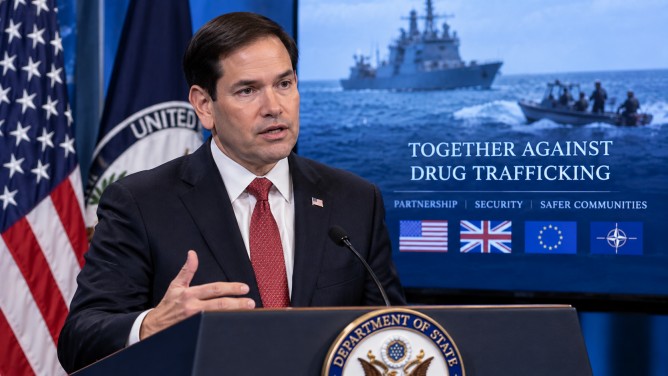
During a recent visit to Ecuador, US Secretary of State Marco Rubio announced plans for the United States to enhance its collaboration with Latin American allies in the fight against drug trafficking. He highlighted that this initiative involves working with countries like Ecuador and Colombia to conduct joint operations, particularly in their territorial waters and in alignment with local laws. Rubio also mentioned that the US military would continue to take action against vessels when deemed necessary.
Rubio’s statements come amid an ongoing US military campaign targeting boats allegedly involved in drug trafficking activities. The most recent operation in the Caribbean Sea resulted in the deaths of three individuals, increasing the reported death toll to at least 230 across 69 operations since the campaign’s inception in September 2025. This campaign has faced scrutiny for its unilateral nature under the previous administration, which accused those targeted of being associated with “narco-terrorists.”
In response to the criticism, Rubio emphasized that future military actions would be carefully evaluated on a case-by-case basis. Decisions would be influenced by the specific threat posed and the location of the suspected vessels. The shift towards greater cooperation with regional governments is intended to more effectively disrupt and dismantle drug-trafficking routes.
Rubio underscored that enhancing partnerships with Latin American nations is a crucial step in addressing the complex challenges posed by drug trafficking. By coordinating efforts with local authorities, the United States aims to respect territorial sovereignty while increasing the effectiveness of their operations. This collaborative approach seeks to bring an end to the routes exploited by traffickers, ultimately aiming for a significant impact on the drug trade.