
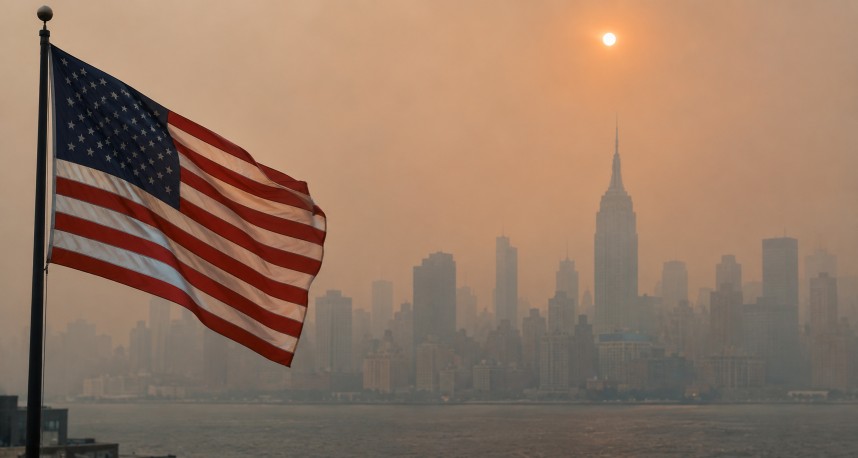
The spread of smoke from numerous ongoing wildfires in Canada has led to air quality alerts across over 20 states in the United States, impacting millions of residents. Originating primarily from fires in northern Ontario, the smoke has moved into the Midwest and Northeast, resulting in unhealthy and hazardous air conditions in several areas. Cities such as Chicago, Detroit, and Minneapolis are among those experiencing the most severe air quality levels, with the haze also reaching as far as New York, Boston, and Washington, D.C.
Health authorities have issued advisories urging the public to limit outdoor activities, emphasizing the risks for vulnerable groups such as children, older adults, pregnant women, and individuals with pre-existing heart or lung conditions. In response to the deteriorating air quality, officials in several states have recommended that residents stay indoors when possible to mitigate health risks associated with the pollution.
New York officials have highlighted the severity of the situation, noting that this smoke event might be the city’s most significant since the thick orange haze from Canadian wildfires enveloped the region in 2023. To address the crisis, the state has distributed thousands of N95 masks and increased access to cooling centers, as residents face the dual challenge of high temperatures and poor air quality.
Weather agencies predict that the smoky conditions will continue to affect parts of the Midwest and Northeast through Friday. However, rain expected later in the weekend could offer some relief by improving air quality in certain areas. The pervasive smoke has intensified discussions about the growing impact of large-scale wildfires and their cross-border effects on public health and the environment.