
The United States has influenced several Western allies to withdraw their support from a European conference on disinformation, following a contentious program element that questioned whether Washington itself could be a source of foreign information manipulation. The #Disinfo2026 conference, scheduled for October 7 and 8 in Vilnius, Lithuania, was intended to bring together a diverse group of researchers, journalists, technology experts, and policymakers to discuss strategies for combating disinformation and information manipulation.
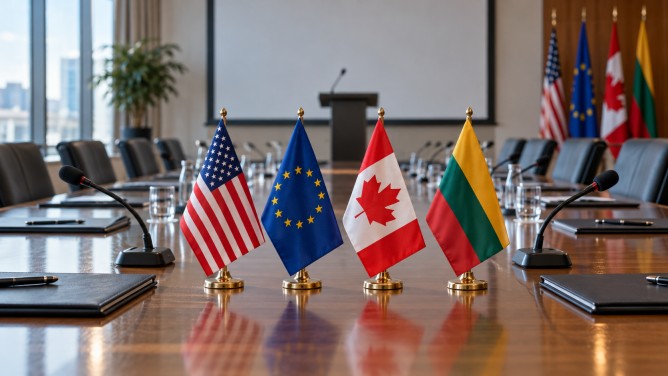
In a notable shift, Lithuania, Canada, and the European Union recently retracted their official endorsements of the conference. This comes after discussions between U.S. officials and their counterparts in those regions, where concerns were raised about participating in a dialogue that might scrutinize U.S. actions. Internal U.S. documents reportedly indicate approval of Lithuania’s decision to lessen its involvement.
Lithuania stated that certain elements of the conference program did not align with the government’s stance, leading to the withdrawal of its foreign ministry’s support. Similarly, Canada adjusted its level of participation due to changes in how several panel discussions were framed, although Canadian officials still attended the event. The European Union also pulled back its support, citing misalignment with its official positions, yet continued to finance the conference.
A central issue of contention was a panel discussion aimed at exploring the United States as a potential threat in terms of foreign information manipulation and interference. This panel sought to assess how European entities might bolster their defenses against information threats independently. The debate has underscored the tensions between countering disinformation and permitting critical examination of government actions.
Despite these withdrawals, France has maintained its backing of the conference, emphasizing the importance of engaging with civil society to develop effective European disinformation policies. This development highlights the growing divergences among Western nations regarding the definition of foreign information threats and the appropriate governmental responses to criticism within international civil society platforms.