
The extension of the Busan agreement between the United States and China offers temporary relief in ongoing trade tensions, marking a critical juncture for the world’s two largest economies. This agreement, now in place until January 10, pauses certain trade measures, allowing both nations to focus on dialogue rather than conflict.
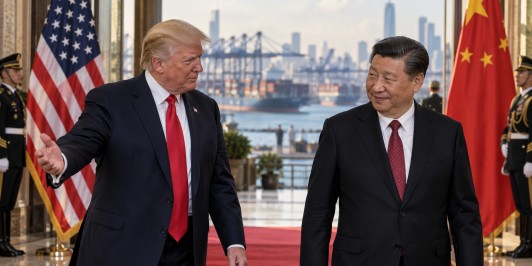
Chinese President Xi Jinping’s state visit to Washington underscores the importance of this cooperation. He was greeted with high honors at Joint Base Andrews by U.S. President Donald Trump and First Lady Melania Trump, highlighting the significance of his arrival. The ceremonial welcome included military honors, national flags, and a flyover by U.S. B-1 bombers, setting a formal tone for the discussions ahead.
During his two-day visit, President Xi will engage in meetings with President Trump and other U.S. officials to address not only trade but also broader strategic issues. Discussions are expected to cover pivotal topics such as artificial intelligence and technology, areas where both nations are keenly competing for dominance.
The backdrop of Xi’s visit is a complex web of geopolitical and economic challenges. Washington and Beijing are navigating a landscape marked by competition in advanced technologies and differing strategic interests. The meetings aim to manage these differences while fostering continued dialogue.
As the U.S. and China continue to vie for technological superiority, particularly in artificial intelligence, the outcomes of this state visit could influence the future trajectory of their bilateral relations. The extension of the trade agreement offers a window for both sides to explore long-term solutions to their economic disagreements.