
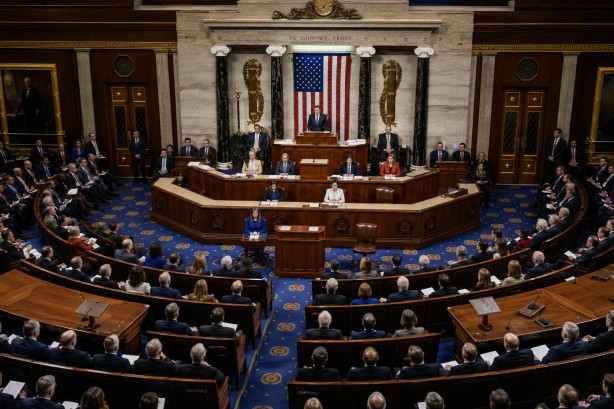
The U.S. House of Representatives has approved a sweeping $1.15 trillion National Defense Authorization Act (NDAA), marking a significant step forward in defense spending amid contentious debates. Passed with a narrow 216-212 vote, the legislation now awaits consideration in the Senate. Key components of the bill include a 5% to 7% pay raise for military personnel and substantial investments aimed at bolstering the country’s armed forces.
Republican leaders have emphasized the necessity of the bill, pointing to the need for modernizing military capabilities to enhance national security. Conversely, the majority of Democrats have opposed the legislation, criticizing the scale of defense spending in light of cuts to other domestic programs. The passage of the NDAA has also been overshadowed by political friction related to President Donald Trump’s recent military actions against Iran, which proceeded without congressional approval, raising concerns about deepening U.S. military involvement in the Middle East.
Democrats have voiced strong objections to elements of the bill that pertain to voting legislation. These provisions, supported by Trump, include stricter voter ID requirements and limitations on mail-in voting, which Democrats argue are inappropriate inclusions in a defense bill. Meanwhile, the House also debated various amendments, including one regarding the cessation of U.S. military aid to Ukraine, which was ultimately rejected. Discussions around transgender military policies and defense healthcare further fueled the intensity of the debates.
Additionally, House Republicans have moved forward with a budget framework that proposes $73 billion for military operations involving Iran. This figure, however, falls significantly short of the broader defense funding proposals put forward by the Pentagon. The political landscape surrounding this defense package remains complex, with ongoing debates about the appropriate allocation of resources and the strategic direction of U.S. military policy.