
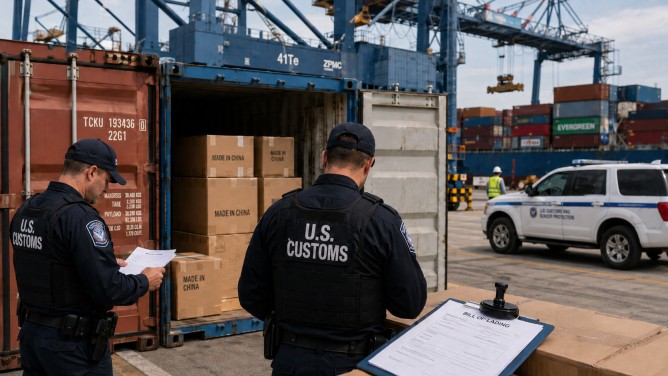
The United States has identified 38 countries along with the European Union as components of a “shadow transshipment network,” which is purportedly enabling Chinese goods, subject to elevated US tariffs, to enter the American market via intermediary nations. A recent report, titled “The Great Transshipment Scam,” estimates that this potentially illicit transshipment activity could be valued at approximately $60 billion, leading to notable losses in US tariff revenue.
Countries and territories implicated in this network include a diverse group such as India, Canada, the European Union, Israel, Japan, Mexico, South Korea, Taiwan, Brazil, Indonesia, Malaysia, Thailand, Turkey, Vietnam, Argentina, Azerbaijan, Bangladesh, Cambodia, Chile, Colombia, Costa Rica, the Dominican Republic, Georgia, Jordan, Kazakhstan, Kenya, Laos, Morocco, Myanmar, Oman, Panama, Peru, the Philippines, Singapore, Sri Lanka, Switzerland, the UAE, and Uzbekistan. The report suggests that in 2025, goods worth about $67 billion, destined for the US, were allegedly rerouted from China through significant hubs like Mexico, India, and Vietnam, potentially resulting in a $28 billion shortfall in US tariff revenue.
A particularly notable aspect of the report is the focus on the Pune-Gujarat-Chennai corridor in India. It claims that Chinese shipments of specific products, such as electric pumps and compressors, have supported businesses within this corridor while simultaneously heightening competitive pressures on American manufacturers.
In response to these findings, the United States is considering a series of measures to combat this alleged evasion of tariffs. Proposed actions include the implementation of stricter inspections and interdiction efforts, the imposition of additional tariffs, the enforcement of sanctions, and possibly restricting market access to those countries that are found to be facilitating tariff evasion.