
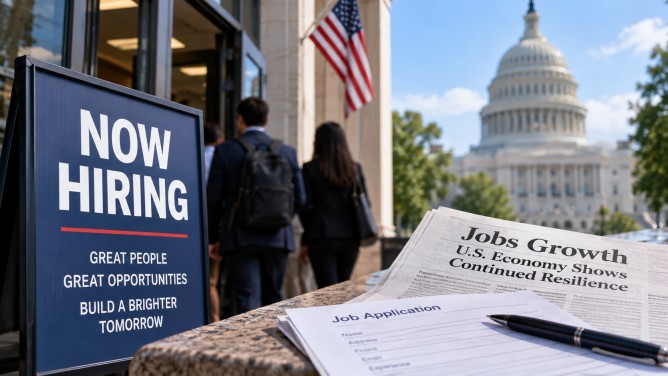
The US labor market saw some improvement in August, with the addition of 162,000 jobs, marking a rebound from the weaker figures reported over the summer months. Despite this uptick, the unemployment rate held steady at 4.1%. This latest job growth surpassed economists’ predictions, who anticipated at least 50,000 new jobs, yet it still highlights an overall slowing trend in employment expansion.
Recent months have experienced considerable volatility in job creation. The economy saw a robust addition of 214,000 jobs in March, but by July, growth had plummeted to a mere 21,000. The August figures represent a modest recovery. Moreover, earlier data for June and July were adjusted upwards, with June’s jobs revised from 20,000 to 31,000 and July transitioning from an initially reported loss of 23,000 to a gain of 21,000 jobs.
However, underlying signs of a cooling labor market persist. In August, private-sector employment rose by just 38,000 jobs, indicating that businesses remain cautious in their hiring practices. The current labor climate has been described by economists as a “slow hire, slow fire” environment, where companies are neither aggressively expanding their workforce nor executing significant layoffs. This sentiment is reflected in the relatively unchanged number of job openings and layoffs in July, alongside a stable rate of workers voluntarily leaving their positions, suggesting an overall hesitance among employees to seek new opportunities.
Adding to the economic challenges, inflationary pressures continue to mount. The annual inflation rate in the US has climbed from 2.4% in February to 3.4% in July, burdening households with rising costs. Concurrently, increasing bond yields have sparked concerns about higher borrowing expenses, affecting mortgages, car loans, and student debt, which could further strain consumer finances.
The Federal Reserve faces a complex task in balancing inflation control with the need to support employment. Raising interest rates might help curb inflation towards the Fed’s 2% target but could also risk exacerbating the slowdown in the labor market. President Donald Trump has been vocal in advocating for lower interest rates, contending that reduced borrowing costs would bolster the US economy.