
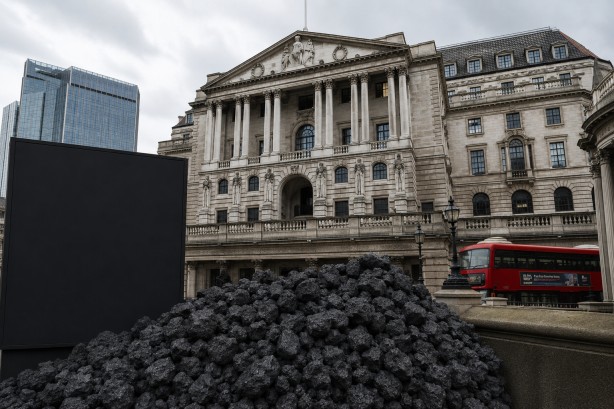
In a decisive move to tackle climate-related financial risks, the Bank of England has declared it will cease accepting bonds tied to thermal coal companies as collateral for its lending operations starting this October. This initiative represents a pivotal effort to mitigate financial exposure to industries reliant on fossil fuels, particularly those used in power generation.
Bonds, often utilized by commercial banks as collateral when borrowing from the central bank, will now exclude those associated with thermal coal. This shift comes amidst growing concerns about the financial viability of companies entrenched in thermal coal, as nations worldwide accelerate their transitions to cleaner energy sources and aim for net-zero emissions targets. The central bank underscored that assets linked to coal are at risk of depreciating over time as a result of these global shifts.
Accompanying this policy, the Bank of England retains the ability to impose discounts on bonds from other sectors that are similarly susceptible to climate risks. This measure is designed to safeguard its balance sheet against potential devaluation of assets subjected to environmental factors.
Environmental organizations have lauded the bank’s decision, viewing it as a robust indication to the financial markets that could spur commercial banks to further divest from high-pollution industries. This step aligns with the actions of over 150 major financial institutions globally, which have already implemented restrictions on business dealings tied to the thermal coal sector.
Analysts emphasize the significance of accurately assessing climate risks to ensure the policy’s efficacy. They also suggest that the potential expansion of such measures to other environmentally detrimental activities could amplify the overall impact of the Bank of England’s strategy in promoting sustainable financial practices.