
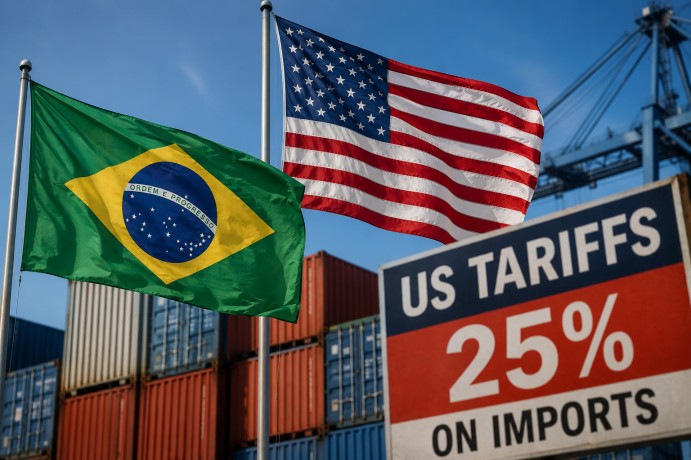
The Brazilian government has expressed strong disapproval over the United States’ recent decision to impose a 25% tariff on certain products from Brazil, effective from July 22. The move has been labeled as unjustified by Brazilian officials, who firmly reject accusations of engaging in unfair trade practices. In a formal statement, Brazil asserted its commitment to fair trade and opposed the tariff measures announced by U.S. authorities.
According to the U.S. Trade Representative, the decision to implement these tariffs follows a comprehensive investigation that highlighted several unfair trade practices attributed to Brazil, including inadequate anti-corruption measures and what are deemed unreasonable trade policies. The tariffs are designed to promote fair competition for American businesses and workers. Despite the imposition of these tariffs, the U.S. has excluded several Brazilian products, such as coffee, beef, oranges, orange juice, certain oil and gas products, and aerospace components, from the list to prevent any disruption in the supply chain.
U.S. Secretary of State Marco Rubio has criticized the administration of Brazilian President Luiz Inácio Lula da Silva for failing to engage in good-faith negotiations. Rubio pointed out that Brazil’s economic policies have adversely impacted both American and Brazilian interests. The U.S. maintains that the tariffs serve as a necessary step to ensure equitable trading conditions.
In response, Brazil has firmly dismissed the allegations made by the U.S. and continues to challenge the legitimacy of the tariff decision. Brazilian officials remain open to dialogue and negotiation but stand by their stance against the accusations of unfair trade practices. The ongoing dispute underscores the complexities of international trade relations between the two nations.